Few things are as frustrating as pulling your quiche from the oven only to find it hasn’t set properly. Instead of a firm, sliceable custard, you’re left with a soupy, watery mess that falls apart on the plate. Understanding why this happens, and how to prevent it is key to mastering this classic dish.
The Foundation: Getting Your Egg-to-Dairy Ratio Right
The most common reason for a watery quiche is an incorrect ratio of eggs to dairy. Many home cooks make the mistake of adding too much cream or milk, thinking it will make the quiche extra decadent. Unfortunately, no matter how long you bake it, if there’s too much liquid, the custard simply won’t set.
The Golden Rule
The standard formula for quiche custard is one large egg to 1/2 cup of dairy. For a standard 9-inch quiche, this translates to 3 large eggs whisked with 1-1/2 cups of milk or cream.
However, this ratio isn’t rigid. Some recipes use one egg for every 1/3 cup of dairy for a firmer set, while others adjust based on additional ingredients. The key is to follow a recipe’s proportions carefully, resisting the urge to add “just a splash more” cream.
When Ratios Get Tricky
If you’re incorporating rich cheeses like ricotta or mascarpone into your filling, they add both moisture and fat, which can affect the custard’s ability to set. In these cases, you might need to reduce the amount of liquid dairy or add an extra egg to compensate.
Celebrity chef Giada De Laurentiis recommends adding Parmesan cheese if your quiche turns out too loose, as it helps bind everything together while adding flavor. The cheese solidifies as it cools, providing additional structure to the custard.
The Vegetable Problem: Too Much Water
Even with the perfect egg-to-dairy ratio, your quiche can still turn out watery if your fillings contain too much moisture. Vegetables are often the hidden culprits, releasing water as they cook and diluting your carefully measured custard.
High-Risk Vegetables
Vegetables that are particularly prone to releasing moisture include:
- Mushrooms
- Tomatoes
- Zucchini
- Spinach
- Bell peppers
The Pre-Cooking Solution
The fix is simple but crucial: pre-cook your vegetables before adding them to the quiche. Sauté mushrooms until all their liquid has evaporated and they’re beginning to brown. For leafy greens like spinach, cook them down and then squeeze them firmly in a clean kitchen towel to remove as much water as possible.
Read the Raw vs Cooked Guide for tips on what should be cooked and what can go in raw..
For tomatoes, either use sun-dried tomatoes instead of fresh, or roast fresh tomatoes until they’ve concentrated and lost most of their moisture. The same principle applies to zucchini—sauté it first and let excess moisture evaporate.
Making your fillings as dry as possible ensures they won’t release water into the custard during baking, keeping your quiche firm and sliceable.
Don’t Overload Your Quiche
Even with perfectly dry ingredients, you can run into problems if you add too much filling. A standard 9-inch quiche only has about 2-1/4 cups of custard to hold everything together. If you pack in too many vegetables, meat, or other add-ins, there simply isn’t enough custard to bind them and still achieve that silky texture.
As a general rule, limit your total add-ins to about one cup. You can be a bit more generous with cheese since it melts into the custard and enriches it, but other ingredients should be measured more carefully. For more information browse the best cheese to use in your quiche.
Baking Temperature Matters
Baking at too low a temperature can also contribute to a watery quiche. The custard needs sufficient heat to set properly. While every recipe varies slightly, most quiches bake best at temperatures between 350-375°F.
Starting at a higher temperature (around 400°F) for the first 10 minutes can help set the structure, then reducing to a lower temperature (around 325°F) allows the custard to cook through gently without overcooking.
Use the Right Baking Dish
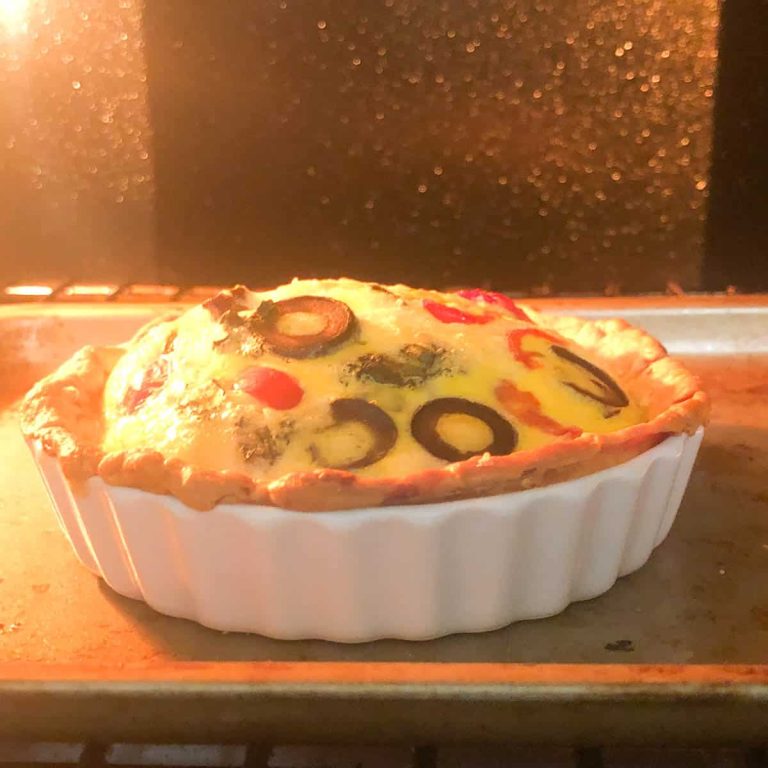
Shallow pie plates are often too shallow for proper quiche custard. The filling needs to be 2 to 2-1/2 inches deep to cook properly. A shallow dish means the custard layer is thinner, making it more prone to overcooking and becoming watery or rubbery.
Consider using a deep-dish pie plate, a springform pan, or a dedicated quiche pan with fluted sides. These provide the depth needed for the custard to set with the ideal texture.
How to Save a Watery Quiche
If you’ve already baked your quiche and it’s too loose, don’t throw it away. Here are some rescue options:
- Add more cheese and return it to the oven. The additional cheese will help bind the mixture together
- Continue baking at a lower temperature if it seems under cooked
- Rebrand it as a savory egg bake or frittata; no one needs to know it wasn’t your original intention
- Let it rest at room temperature for 15-20 minutes after baking; quiches continue to set as they cool
The Bottom Line
A watery quiche usually comes down to one of three issues: too much liquid in the custard, too much moisture in the fillings, or not enough depth in your baking dish. By following the proper egg-to-dairy ratio, pre-cooking your vegetables, and using an appropriately sized pan, you’ll achieve a quiche with a perfectly set, creamy custard that slices beautifully and holds its shape on the plate.
For more helpful tips check out our Troubleshooting section.